


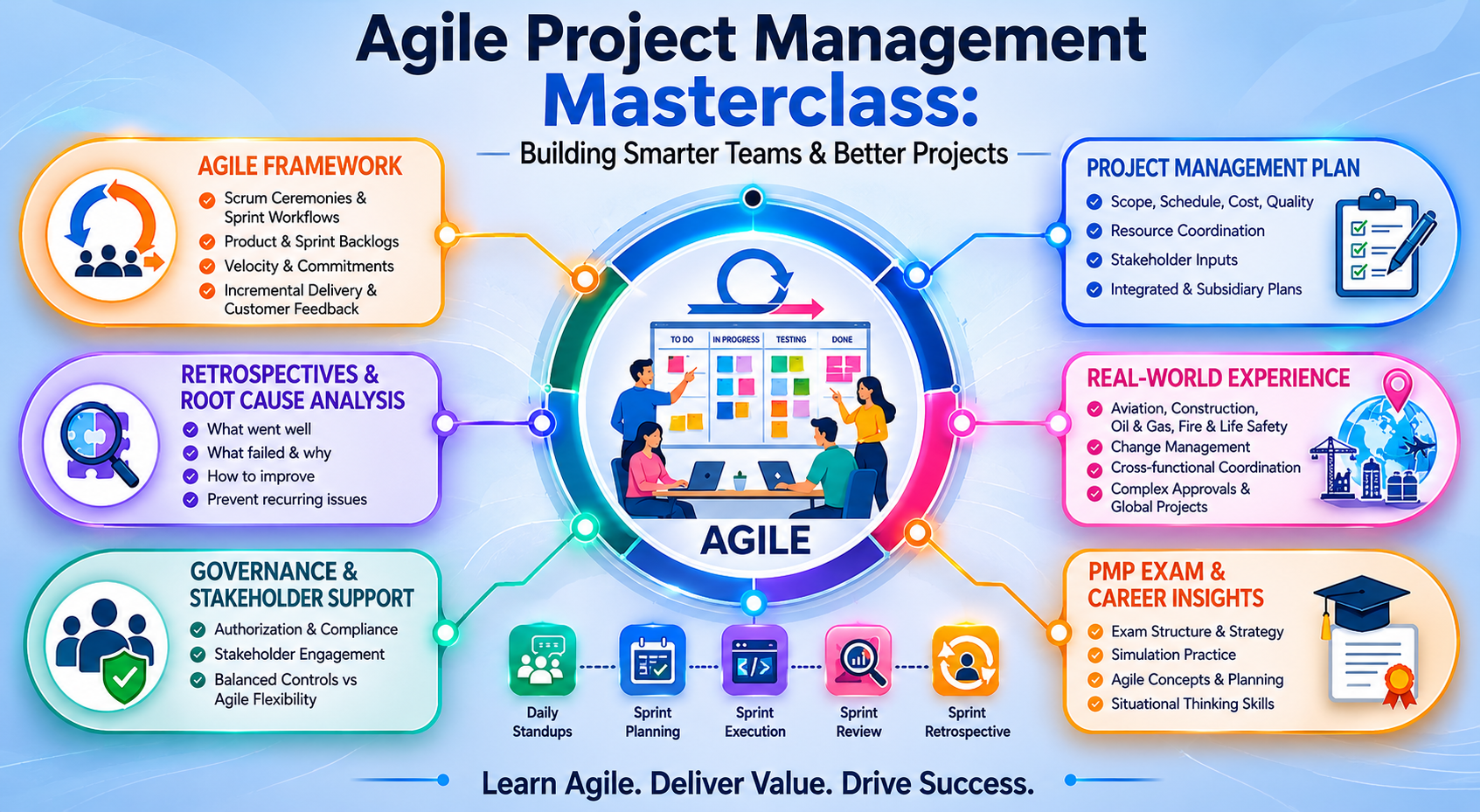
Team Academy learners recently participated in an intensive training session led by Naz, focused on the practical foundations of Agile Project Management, Scrum methodologies, stakeholder governance, and project planning strategies used in real-world industries.
From sprint planning and retrospectives to compliance requirements and PMP exam insights, the session gave participants a powerful understanding of how successful projects are managed in both Agile and traditional environments.
📌 Key Highlights from the Session
🔄 Understanding the Agile Framework
Naz introduced the core structure of Agile project management and explained how Agile teams organize and deliver work efficiently through iterative development.
Participants explored:
-
Scrum ceremonies and sprint workflows
-
Product Backlogs vs Sprint Backlogs
-
Team velocity and sprint commitments
-
Incremental delivery and customer feedback loops
-
Agile artifacts and project transparency
💡 One important lesson:
Teams should only commit to work they can realistically deliver based on their velocity and experience.
At the end of every sprint, teams are expected to demonstrate completed work to stakeholders and gather feedback for continuous improvement.
🧠 Root Cause Analysis & Retrospectives
A major focus of the training was the importance of learning from failures rather than hiding them.
Naz emphasized that retrospective meetings should include:
✅ What went well
✅ What failed
✅ Why problems occurred
✅ How to improve future sprints
The discussion highlighted how identifying root causes:
-
Prevents recurring issues
-
Saves project time and cost
-
Improves team collaboration
-
Strengthens project delivery quality
Participants also reviewed Agile ceremonies, including:
-
Daily standups
-
Sprint planning sessions
-
Sprint reviews
-
Retrospective meetings
🏗️ Governance, Compliance & Stakeholder Support
The session explored how projects operate within governance and compliance frameworks, especially in regulated industries like:
-
Aviation
-
Construction
-
Oil & Gas
-
Fire & Life Safety
Naz explained how:
-
Projects require proper authorization
-
Compliance is part of governance
-
Stakeholder support is essential for funding and execution
-
Excessive bureaucracy can slow down project delivery
Real examples from Qatar-based projects helped learners understand the balance between:
⚖️ Necessary process controls
⚡ Agile flexibility and speed
📋 Building an Effective Project Management Plan
One of the most valuable parts of the session focused on creating a Project Management Plan (PMP).
Naz explained that the PMP acts as the central integrated document containing:
-
Scope Management Plan
-
Schedule/Time Management Plan
-
Cost Management Plan
-
Quality Planning
-
Resource Coordination
-
Stakeholder Inputs
Participants learned:
✔ How subsidiary plans work together
✔ Why planning starts with scope definition
✔ The difference between project documents and management plans
✔ How predictive and Agile lifecycles differ
To simplify the concept, Naz used a relatable family vacation planning analogy to explain project coordination and integration.
🌍 Real-World Project Management Experience
Naz shared insights from managing large-scale international projects, including:
-
Museums
-
Theme Parks
-
Multi-consultant infrastructure projects
These examples helped participants understand:
-
Change management challenges
-
Cross-functional coordination
-
International stakeholder communication
-
Complex approval processes
The class also discussed how rigid corporate processes can create bottlenecks and why Agile methodologies are increasingly adopted to improve adaptability.
🎓 PMP Exam Insights & Career Guidance
Participants were especially inspired by Naz’s personal PMP certification journey.
📚 Key takeaway:
Naz successfully passed the PMP exam in 3 hours and 20 minutes after 3 weeks of focused preparation.
He emphasized:
-
Understanding the exam structure
-
Practicing with simulation software
-
Focusing on planning and Agile concepts
-
Developing situational thinking skills
This section motivated many learners preparing for project management certifications and leadership roles.
🚀 Why Agile Skills Matter Today
Modern organizations are rapidly shifting toward Agile and hybrid project management approaches.
Professionals who understand:
-
Scrum
-
Sprint Planning
-
Stakeholder Management
-
Governance
-
Agile Delivery
-
PMP Concepts
are becoming highly valuable across industries.
This training equipped participants with practical, job-ready knowledge that applies directly to:
✔ IT Projects
✔ Construction Projects
✔ Business Transformation
✔ Product Development
✔ Enterprise Operations
📅 Continue Your Learning Journey with Team Academy
At Team Academy, we focus on:
✅ Practical project management training
✅ Real-world Agile implementation
✅ Certification-focused learning
✅ Industry-relevant case studies
✅ Career development support
👉 Ready to Advance Your Project Management Career?
Join our upcoming training programs and gain the confidence to manage projects effectively in today’s fast-moving business environment.
📩 Contact Team Academy today to reserve your seat in the next batch!


